









Understanding Crypto Sanctions and Their Effects
Have you ever wondered how crypto sanctions can shape the landscape of digital currencies? Recently, the U.S. Treasury took a bold step by sanctioning Iran’s largest crypto exchange, Nobitex, along with other platforms. This move is not just a routine regulatory action; it’s part of a broader strategy to manage economic relations and deter illicit activities.
Table of Contents
- What Are Crypto Sanctions?
- The Iranian Crypto Market
- Impact on Crypto Exchanges
- The U.S. Strategy
- What It Means for Users
- The Future of Crypto Sanctions
What Are Crypto Sanctions?
Crypto sanctions refer to restrictions imposed on cryptocurrency exchanges and related entities to prevent them from engaging in illegal activities or supporting terrorism. In this case, the U.S. Treasury’s Office of Foreign Assets Control targeted Nobitex and three other platforms in response to their involvement with Iran’s Islamic Revolutionary Guard Corps (IRGC) and other illicit operations.
These sanctions are part of a strategic framework that governments utilize to exert economic pressure. By limiting access to financial systems, authorities aim to curtail the ability of targeted entities to operate. For instance, when a crypto exchange is sanctioned, it is not just blocked from the U.S. market; it often finds itself ostracized from the global financial system, as other nations and entities may hesitate to engage with a sanctioned platform due to fear of repercussions.
The Iranian Crypto Market
The Iranian crypto market has grown significantly, with estimates placing its value around $7.8 billion. Nobitex alone accounts for over half of all digital asset inflows in the country. These platforms have been identified as crucial channels for transferring wealth and evading sanctions, particularly during times of economic pressure.
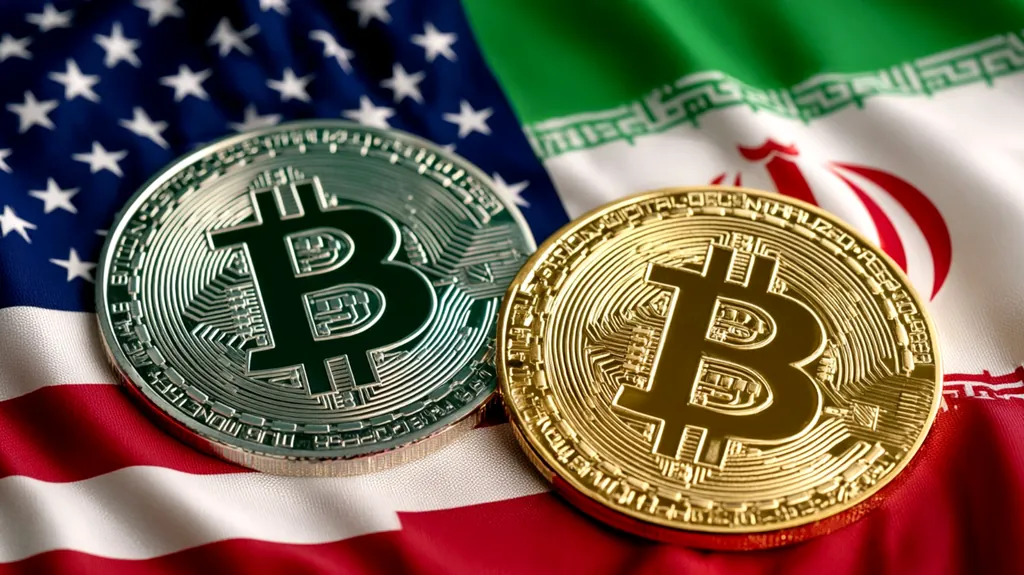
In 2025, Nobitex processed a staggering amount of transactions, revealing its integral role in Iran’s financial landscape. Other platforms, like Wallex and Bitpin, also play significant roles, facilitating transactions that link back to the IRGC. The growth of these exchanges illustrates a broader trend where nations under economic sanctions turn to cryptocurrencies as a means of circumventing traditional banking systems. This phenomenon isn’t unique to Iran; other countries, like Venezuela and North Korea, have also embraced crypto to evade sanctions.
The rise of the Iranian crypto market also highlights a critical tension between innovation and regulation. While crypto provides new opportunities for individuals and businesses, it also poses significant challenges for governments trying to enforce economic sanctions. As more people turn to crypto as a safe haven amid economic turbulence, the potential for misuse becomes a pressing concern for regulatory bodies worldwide.
Impact on Crypto Exchanges
The recent sanctions on Nobitex and others are designed to send a message. These measures not only block access to U.S. financial systems but also put pressure on exchanges globally. Compliance professionals are now closely watching how these sanctions will influence foreign exchanges and stablecoin issuers, particularly regarding their dealings with Iranian users.
As U.S. Treasury Secretary Scott Bessent stated, these crypto sanctions are part of a broader strategy to undermine Iran’s economy, which is already in a precarious state. With the designation of specific leaders within these exchanges, the U.S. is shifting focus from merely targeting platforms to holding individuals accountable. This new approach may have a more significant deterrent effect.
Moreover, many exchanges are reassessing their compliance strategies. They are now more likely to implement rigorous Know Your Customer (KYC) and Anti-Money Laundering (AML) measures to avoid inadvertently facilitating transactions linked to sanctioned entities. Some exchanges may even consider delisting certain cryptocurrencies or restricting access to users based in sanctioned countries.
The U.S. Strategy
The U.S. has reinforced its position by invoking executive orders that allow for these sanctions. Specifically, E.O. 13224 and E.O. 13902 target individuals and organizations operating in Iran’s financial sector. The consequences are severe: all U.S. property interests are blocked, and foreign companies risk exposure to secondary sanctions if they continue business with sanctioned entities.
This strategy reflects a shift in how the U.S. engages with the global financial system, increasingly using sanctions as a tool of foreign policy. By leveraging the dominance of the U.S. dollar and American financial institutions, the U.S. can exert significant influence over the practices of foreign exchanges and entities. This has raised concerns about the growing power of the U.S. in controlling global finance and the potential for creating a bifurcated financial system where U.S. allies and adversaries operate under vastly different rules.
What It Means for Users
For users of these crypto exchanges, the implications can be significant. If you’re trading on platforms like Nobitex, you might find your access restricted, and your transactions could be monitored more closely. As the U.S. Treasury has indicated, facilitating payments through these channels poses risks of sanctions, potentially impacting ordinary users who may be unaware of the broader political implications.
Moreover, the sanctions may lead to increased scrutiny on similar exchanges worldwide. Will stablecoin issuers cut ties with Iranian users? Experts believe this is a possibility, as the legal justification for doing so is now more robust. This could lead to a chilling effect where users in sanctioned regions find it increasingly difficult to access essential services and perform transactions, driving them further underground or into less regulated markets.
Additionally, users need to be vigilant about the platforms they choose for trading. As more exchanges implement stricter compliance measures, those that fail to do so may face legal repercussions, leading to potential losses for users who have funds trapped on non-compliant exchanges. The uncertainty surrounding the future of exchanges like Nobitex will likely lead users to seek alternatives, potentially leading to a shift in user bases and trading volumes.
The Future of Crypto Sanctions
Looking ahead, the landscape of the crypto market will likely evolve in response to these sanctions. With the U.S. Treasury taking a firmer stance, we could see more countries adopting similar measures, leading to a fragmented global crypto ecosystem. As nations react to these pressures, the flow of digital assets could shift dramatically.
Furthermore, as technological innovations continue to emerge within the crypto space, we might witness the development of decentralized exchanges (DEXs) that operate beyond the reach of traditional regulatory frameworks. While these platforms offer increased privacy and autonomy, they also present challenges for compliance and enforcement. The rise of DEXs could further complicate the implementation of crypto sanctions, as they often lack central oversight.
In conclusion, the recent crypto sanctions against Iran’s largest exchange highlight the intertwined nature of politics and the crypto world. As these developments unfold, it’s essential to stay informed and understand how they might affect not just markets but the very foundation of digital finance.
For more detailed insights on how these changes impact the crypto landscape, check out this comprehensive post on the impact of crypto sanctions.